First-time visitor
See one area deeply around Haeundae and Gwangalli eastern beaches to keep your first map simple.
Busan and South Gyeongsang
BusanBusan
A port city where mountains, sea and harbor overlap
A port city where mountains, sea, harbour and old-town markets overlap.
Coastal weather, waves and beach crowds can change; check Busan city official guidance.
See one area deeply around Haeundae and Gwangalli eastern beaches to keep your first map simple.
Choose a different area from last time and start slowly around Nampo-dong and Jagalchi old downtown to find a new texture.
Add market and indoor rests between walks for the family, and keep the Haeundae and Gwangalli eastern beaches route short.
Keep climbs and long walks short, and fix meals and rests near stations around Haeundae and Gwangalli eastern beaches first.
Pair an easy solo market meal with a quiet rest; start lightly around Nampo-dong and Jagalchi old downtown.
A port city where mountains, sea and harbor overlap
The best season for the sea and the best season for walking may differ: at Haeundae and Gwangalli check wind and waves, and in hillside areas such as Gamcheon and Yeongdo allow for shade and climbs. In peak holiday and festival periods beaches and the old downtown can both be busy; for a calmer feel, walk beaches early and give old-town markets their own day. In heavy rain, storms or heat, shorten coastal walking and keep markets and indoor places as alternatives.
Busan runs on subway and buses, but its areas are spread out - eastern beaches at Haeundae and Gwangalli, the old downtown around Nampo-dong and Jagalchi, Yeongdo and Taejongdae, and Beomeosa on the Geumjeongsan slopes - so grouping by area is the key skill. First-time visitors do better going deep in one side rather than forcing eastern beaches and the western old town into one day, and should count walking and climbing separately on coasts and hillsides. Check routes and fares in official transport guidance before leaving.
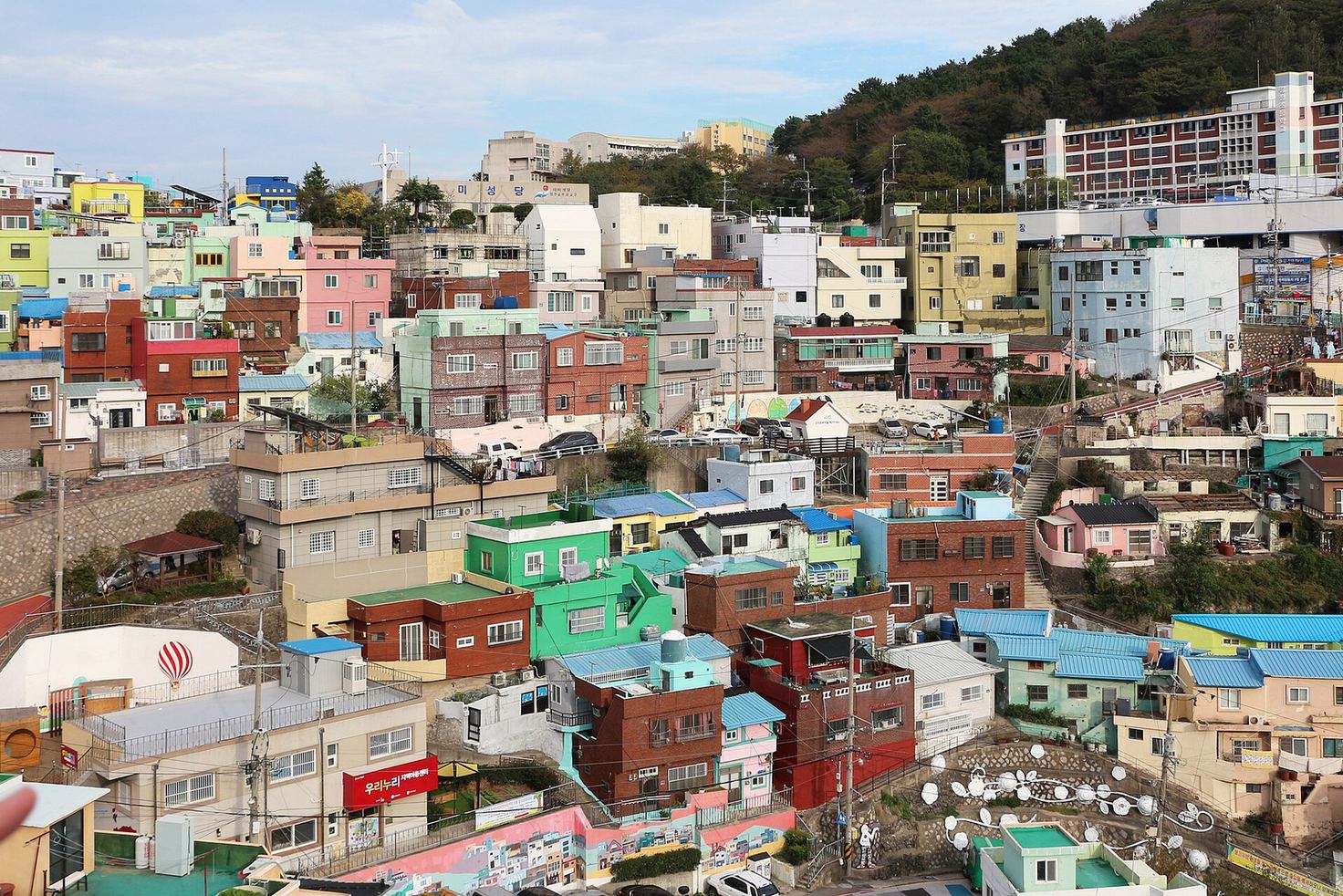
Busan culture brings together port-city history and wartime-era traces, the hillside lanes of Gamcheon Culture Village, film and festival atmosphere by the sea, Beomeosa Temple on the Geumjeongsan slopes and Haedong Yonggungsa by the water. In the old downtown treat markets and lanes as living places, and in villages and temples be careful with photography and noise around residents and worshippers. Read the port and old-town layers alongside the beaches and Busan's character sharpens.
Food centres on the old-town market area of Jagalchi and Gukje markets, everyday restaurants in Nampo-dong, and dining and cafes near Haeundae and Gwangalli beaches. Fit Busan dishes such as pork soup and wheat noodles into one meal inside that area's route, and at seafood markets check what is included and how to pay before ordering. Eat within the beach area on beach days and within the old downtown on market days to keep travel simple.
The main cautions are coastal weather and waves, beach and festival crowds, and walking load on hillside and cliff sections such as Gamcheon and Yeongdo. In rain or strong wind, cut outdoor stretches at Taejongdae and coastal temples and switch to old-town markets and indoor places; in heat, mix shade and indoor rests into beach and uphill lane walking. Do not assume swimming, events or operations; recheck Busan city and venue official guidance. Verified: 2026-10-21
For a longer stay, choose between seaside living around Haeundae and Gwangalli, downtown living around Seomyeon and Nampo-dong, and neighbourhoods near Geumjeongsan and campus streets by which suits a daily walking and shopping rhythm. Look beyond the sea view to station, market, everyday shops and medical access, and verify contract terms and house rules directly in official guidance and the contract before signing.
Busan is a maritime city where mountains come close to the sea and the port developed along that terrain. Through opening to trade and the Korean War, many people settled here, and neighborhoods formed in layers along slopes and shores. Port, markets, beaches and hillside viewpoints therefore appear in one connected cityscape.
Divide Busan by area first. The eastern beaches around Haeundae and Gwangalli, the old downtown around Jagalchi and Nampo-dong, and the western living areas around Gamcheon and Yeongdo each have a different mood and way of moving. Choose which sea you want to stay by longest before choosing lodging.
Even the same sea looks different by area: wide sandy beaches, a working harbor, and cliffs and islands in the west make different trips. Let that choice shape meals, evening walks and the next morning direction.
Busan is wide and hilly, so distance on a map alone can make an unrealistic plan. Combine coastal travel with hillside walking and keep each day simple. Routes, beach operation and facility information can change, so check official links rather than treating this guide as final.
Beach and viewpoint days depend heavily on weather. Prepare an alternative centred on markets, museums and indoor spaces for wind or rain. When choosing lodging, look beyond a sea view to the evening return route, nearby daily needs and station access.
Haeundae and Gwangalli represent Busan beaches for walking and views. Haedong Yonggungsa Temple overlaps temple space with rocky coast, while Beomeosa Temple on Geumjeongsan offers quiet away from downtown. Beach use changes with season and weather, so check official and weather information.
Jagalchi Market, Gukje Market and Nampo-dong show port market culture and old downtown daily life together. Gamcheon Culture Village is a hillside residential area to walk respectfully. Yeongdo and Taejongdae give cliff and harbor scenery in the western direction.
Choose by purpose: linger in a beach area for the sea itself, centre markets and alleys for port life, and place temples and viewpoints on clearer days. Leave time simply to feel wind and waves.
Subway lines link downtown and major beach areas, but not every coastal place is near a station. Where bus and walking combine, allow for slopes and stairs. Airport, rail and terminal connections can change, so verify them in official guidance.
Distances between areas are real; seeing the eastern beaches and western old downtown deeply in one day is difficult. Choose one direction per day and walk within it. Coastal paths and viewpoints may be controlled in wind and waves, so follow official and on-site notices and check lighting after dark.
Jagalchi Market is known for seafood market culture, while Gukje Market and Bupyeong Kkangtong Market continue into food alleys. Shops differ in items and days, and fresh seafood varies by season and catch, so check price and origin signs on site.
Pork soup, wheat noodles and seed hotteok are local dishes often named for Busan. If seafood is unfamiliar, ask about cooking style and heat, and state allergies clearly. Bookable experiences can change, so confirm official information before applying.
Plan meals with market walking: look around a market, eat a local dish nearby, and pair beach areas with cafes and walks. Confirm market food contents and price calculation before ordering, and share several dishes when travelling together.
This itinerary is an example; hours and travel times are not asserted.
Note
These examples do not assert opening hours or travel times. Day one groups Jagalchi Market, Gukje Market, Nampo-dong and Yeongdo as old downtown and harbor. Day two centres Haeundae, Gwangalli and beach walking at a slower pace.
Note
Day three chooses one western direction such as Gamcheon, Songdo or Dadaepo. Day four pairs one temple, Beomeosa or Haedong Yonggungsa, with a nearby beach. Move markets and indoor places forward in poor weather and confirm closures before finalising.
Busan costs vary with lodging area and sea view, how much seafood you eat, paid viewpoints and experiences. Do not treat any amount here as fixed; budget by lodging, transport, food, entry and experiences, plus a reserve. Seaside and downtown lodging balance price and convenience differently.
Market food spending varies by item and cooking style. Confirm price signs, contents and whether cooking is included before ordering. Festival and peak periods can change lodging and transport conditions, so check booking and cancellation terms.
First decide whether sea view or transport convenience matters more. Fix only the viewpoints and experiences you most want, decide others with weather, and check official conditions at booking.
Summer is hot and humid and known for beach use, but monsoon and typhoon effects are possible. Check weather warnings and beach operation officially, and switch from swimming to walking and views when waves are high. Flower, foliage and festival dates vary by year.
Spring and autumn are often chosen for beach walks and old downtown walking together. Winter sea wind can feel colder than downtown, so prepare wind protection for the coast. On dusty or windy days, markets and indoor spaces may serve better than viewpoints.
Coastal temperature can feel lower even on mild days, so carry a light outer layer. In summer alternate beach time with shade, and in winter avoid stretching night walks after sunset. Check warnings before departure and again in the morning.
The common mistake is treating beach areas as close on a map and packing in too many. Busan rewards one direction per day. In residential villages such as Gamcheon, reduce noise and respect privacy; at beaches check waves, slippery rocks and lighting after sunset first.
Ordering market food without confirming price and contents, or not checking closures, is also common. Recheck official guidance the day before and prepare alternatives. Use Korea Tourism Organization, Busan official and weather channels for coastal safety.
Write a short area checklist before departure: lodging to first place, an indoor alternative, and how to return to station or airport on the last day. Those few lines stabilise a day in a wide city like Busan.
Grouped by place type.
해운대해수욕장
Nearby in the same area
Before you visit: Swimming and waves change with weather. Check city, beach and weather official guidance first.
Visit Busan official guide광안리 해수욕장
Nearby in the same area
Before you visit: Evening lighting, events and beach use can change by period. Check Busan city and Suyeong-gu official guidance first.
Visit Busan official guide자갈치시장
Nearby in the same area
Before you visit: Items, trading and prices differ by stall. Confirm price and contents before ordering and refer to official market guidance.
Visit Busan official guide국제시장
Nearby in the same area
Before you visit: Opening and items differ by shop. If a specific shop is your goal, check official guidance and on-site signs first.
Visit Busan official guide남포동
Nearby in the same area
Before you visit: Street events and shop trading can change by period. Check Busan city and Jung-gu official guidance first.
Visit Busan official guide감천문화마을
Nearby in the same area
Before you visit: Keep noise down and respect private property and photography manners. Stairs are many, so wear comfortable shoes and check city and district guidance.
Visit Busan official guide영도
Nearby in the same area
Before you visit: Coastal paths and lanes can change with weather and site conditions. Check Busan city and Yeongdo-gu official guidance first.
Visit Busan official guide태종대
Nearby in the same area
Before you visit: Cliff sections can be controlled in wind and waves, and rocks can be slippery. Follow on-site guidance and official city and district notices.
Visit Busan official guide해동용궁사
Nearby in the same area
Before you visit: Observe temple manners and take care on rocks and steps. Events and visiting guidance can change, so check temple and city guidance.
Visit Busan official guide범어사
Nearby in the same area
Before you visit: Keep quiet in the grounds and take care where paths meet hiking trails. Check temple and city official guidance for visits and events.
Visit Busan official guideExamples only; hours and travel times are not asserted.
Day
See Jagalchi and Gukje markets
Have lunch near the markets
Walk Nampo-dong alleys
Rest with a view and have dinner downtown
Rain alternative: In rain, shorten outdoor walking and switch to nearby markets, museums and indoor places.
Walking and travel load: Travel and walking can continue, so add rests and leave slack at transfers.
Day one: old downtown
Group Jagalchi and Gukje markets
Have a market-food lunch
Walk Gamcheon Culture Village slowly
Have dinner downtown and rest
Day two: eastern beaches
Walk Haeundae Beach
Have lunch near the beach
Rest at a beach cafe
See the evening view at Gwangalli
Rain alternative: On wet days, place indoor viewing and market sections first and keep outdoor parts short.
Walking and travel load: Walking stretches can grow, so set rest points in advance and do not rush.
Day one: old downtown
See Jagalchi Market and Nampo-dong
Have lunch, then rest at a viewpoint
Walk old downtown in the evening
Day two: Yeongdo
Walk Yeongdo coastal villages
Have lunch in Yeongdo
See Taejongdae coastal scenery
Rest at a coastal cafe
Day three: temple and beach
Choose Beomeosa or Haedong Yonggungsa
Have lunch near the temple
Take a light beach walk
Finish with a cafe rest
Rain alternative: If it rains, swap walking-heavy parts for indoor places and keep outdoor time brief.
Walking and travel load: Climbs and long walks may be mixed in, so group the route in one area and move slowly.
For highly changeable items, official confirmation comes first. Recheck official guidance before departure.
Verified against official guidance from Busan Tourism Organization Visit Busan.
Checked: 2026-10-22
Busan Tourism Organization Visit BusanVerified against official guidance from Busan Metropolitan City.
Checked: 2026-10-22
Busan Metropolitan CityVerified against official guidance from Korea Tourism Organization VISITKOREA.
Checked: 2026-10-22
Korea Tourism Organization VISITKOREAVerified against official guidance from Korea Heritage Service heritage portal.
Checked: 2026-10-22
Korea Heritage Service heritage portalVerified against official guidance from Ministry of Justice Hi Korea.
Checked: 2026-10-22
Ministry of Justice Hi KoreaVerified against official guidance from Busan Transportation Corporation.
Checked: 2026-10-22
Busan Transportation CorporationVerified: 2026-10-21. Prices, hours, closures, bookings and entry rules can change. Recheck official links before travel.